
Hub map
- Rules + how to play (with HowTo steps)
- Preview video of table layout and reveal pacing
- LudoVegas Lab · N-Streak Doubling 200-Round Test
- Bankroll caps, mistakes, and FAQ
What Is One Of Three?
One Of Three is a 3-choice prediction game. Each round you pick one position from three options and wait for the open. If your position hits, you win according to that round’s payout line.
On LudoVegas it sits next to Teen Patti, Dragon vs Tiger, and Mines as a short-clock lobby game. Many Pakistan players use it between longer card sessions because one decision settles before the next countdown starts.
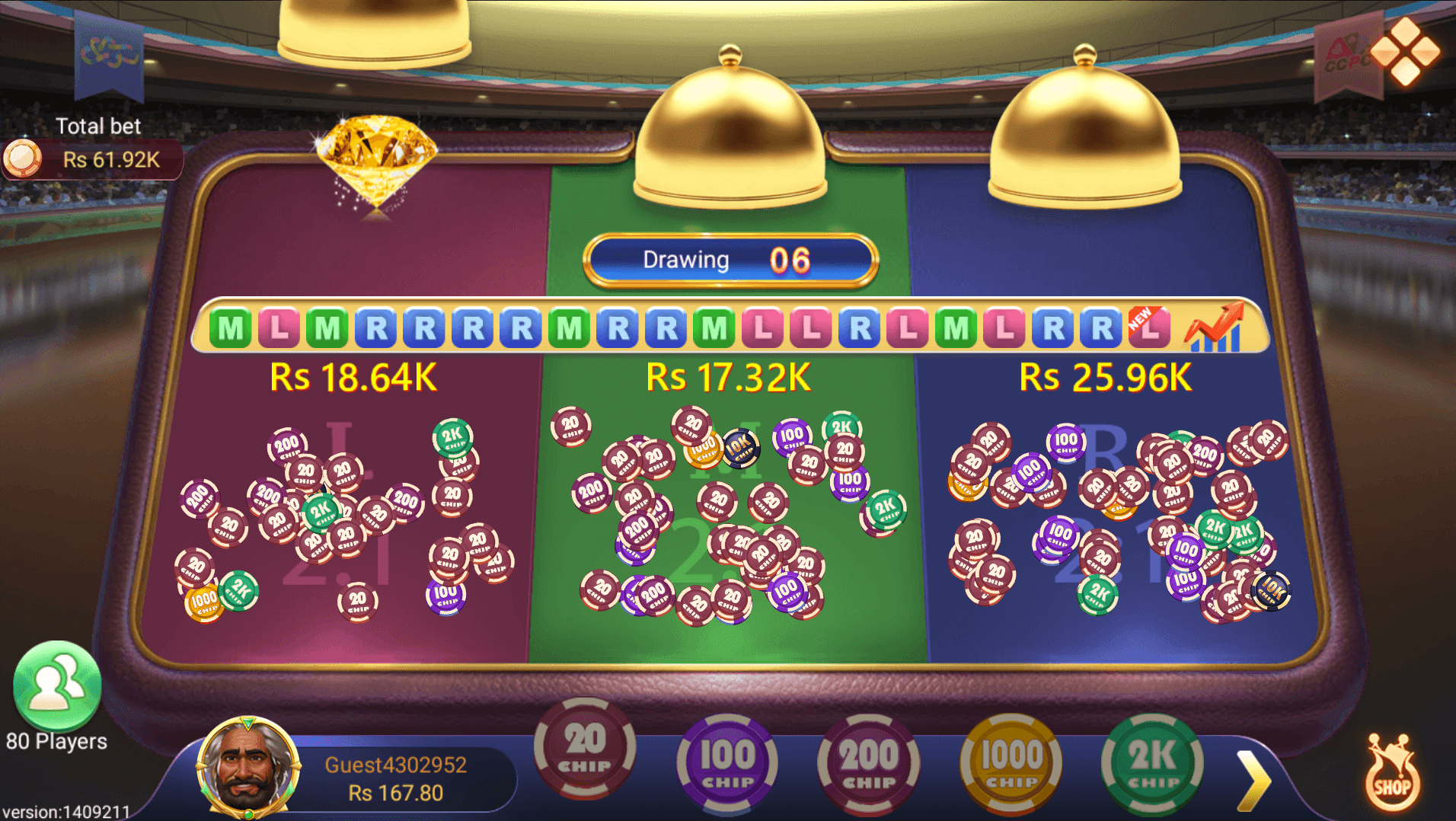
Quick facts
| Item | Detail |
|---|---|
| Choices | Exactly one of three positions per round |
| Pace | Short countdown; repeats well on mobile data |
| Signature method on this hub | N-streak watch + capped doubling |
| Lab chapter | 200-round editorial drill (not a live edge claim) |
| Payments context | JazzCash / EasyPaisa supported on LudoVegas |
| Age | 18+ only · play with a fixed budget |
Watch how One Of Three looks
Play this short preview after the screenshot so you can see position layout and reveal pacing before the Lab section. It is a visual walkthrough only — it does not predict the next open.
Video highlights
- Where the three positions sit on a typical mobile table
- How a single-position stake looks before lock
- How the open animation points to the winning region
- Why each round should be treated as independent, not “due”
How to Play One Of Three (Simple Rules)
- Open One Of Three: Confirm all three positions are labelled and tappable.
- Set your bet: Start from a low base stake that fits a pre-written session budget.
- Pick one position: Choose exactly one option — this hub’s beginner flow does not hedge across all three.
- Confirm before timer ends: Late taps after lock do not count.
- Wait for result: Read the settle line; if your position opens, you win that round’s payout display.
- Reset with limits: Stop when stop-loss or stop-win hits. Do not invent a new N mid-session.
That is why One Of Three is a simple betting game for players who already know Teen Patti timing but want fewer card-rank rules.
Quick Beginner Checklist
- Start with fixed small bets for the first rounds.
- Set a session stop-loss before you begin.
- Never chase losses without a plan.
- Use only gaming budget, not daily expense money.
The Simplest One Of Three Trick: N-Streak + Doubling
This is the basic method many lobby players talk about. The Lab section below stress-tests it — read both before you copy the steps with real money.
- Watch the board and count when one position opens continuously for N rounds.
- When that streak reaches your chosen threshold (for example N=4 or N=5), enter with a small base bet on a different position.
- If the round loses, use controlled doubling on the next step — only up to a hard cap.
- When you recover and get a small profit, reset to the base bet and wait for the next setup.
Easy to execute does not mean risk-free. Without a step cap and stop-loss, one cold streak can erase a week of small wins.
LudoVegas Lab · N-Streak Doubling 200-Round Test
This is the LudoVegas signature chapter for One Of Three. We logged an editorial 200-round drill on a practice bankroll to see how N-streak + doubling behaves when the open sequence refuses to “pay back” on schedule. The goal was not to crown a magic N. The goal was to measure which rule set kept a small Pakistan-style session budget alive long enough to finish the block without emotional rewrites.
Setup notes (written before round 1): base unit = 1% of the practice bankroll; candidate N values = 3, 4, and 5; doubling cap = 3 steps after the entry (entry → 2x → 4x → stop); session stop-loss = 12% of starting bankroll; stop-win = 8%. We also forbade mid-block N changes. If a rule felt “wrong” during a drawdown, we still finished the block and wrote the feeling down after — that is the whole point of a lab: feelings stay out of the stake size.
Across the 200 rounds, streaks of length 3 showed up often enough that N=3 fired too many entries. That created more doubling ladders, and more ladders meant more chances to hit the 3-step wall. N=5 fired fewer times; when it did fire, the waiting cost was boredom more than chips — players on Jazz / Zong mobile data often abandon the table while waiting, then re-enter with a bigger stake. N=4 sat in the middle for our notes: fewer spam entries than N=3, less idle tilt than N=5.
The ugly lesson sat in the uncapped control pass we ran on a separate 50-round slice: removing the doubling cap produced the largest single drawdown of the whole exercise. The open sequence does not owe you a flip after four reds. When we kept the 3-step cap and the 12% stop-loss, several blocks ended flat or slightly down, but they ended with chips left to play Teen Patti or other LudoVegas games later the same night. That is the Lab definition of a usable rule set for this hub.
| Rule set | Entries in 200r (approx.) | Hit 3-step wall | Editorial note |
|---|---|---|---|
| N=3 + 3-step cap | High | Often | Too busy; stop-loss triggered earlier |
| N=4 + 3-step cap | Medium | Moderate | Best balance in our notes |
| N=5 + 3-step cap | Low | Rare | Safer, but idle waiting invites tilt bets |
| Any N, no doubling cap | — | N/A (ran away) | Worst drawdown; do not copy |
Lab takeaway you can paste into a phone note before download: pick N=4, keep a 3-step doubling ceiling, and hard-stop at ~12% session loss. Treat the matrix as a discipline checklist. It is not a claim that the next open must reverse, and it is not financial advice.
How to Use N Value Safely
Tip #1: Choose N First, Then Stick to It
Pick one N value (e.g., 4) before session start. Do not keep changing N emotionally during losses.
Tip #2: Cap the Doubling Steps
Set a maximum progression level (for example 3 steps). If that limit is hit, stop and restart later.
Tip #3: Keep a Tight Stop-Loss
For example, stop the session at 10% to 15% bankroll loss. Protecting capital is more important than one session win.
Tip #4: Lock Profit and Exit
Once daily target is reached, finish the session. Overplaying after profit is one of the biggest mistakes.
Tip #5: Track Results in Notes
Write down N value, entries, and progression outcomes. This helps refine your One Of Three plan over time.
Common One Of Three Mistakes
- Entering too early: Not waiting for a true N streak setup.
- Unlimited doubling: No cap means one bad run can damage bankroll heavily.
- Changing strategy mid-session: Random decisions reduce consistency.
- No daily target: Without stop-win and stop-loss, sessions become emotional.
- Treating the preview video as a signal: The clip only shows layout; it does not tip the next open.
Why Pakistan Players Like One Of Three on LudoVegas
- Very simple gameplay: One tap, one choice, fast result.
- Mobile friendly: Smooth on Android phones across Pakistan networks.
- Local cash experience: EasyPaisa and JazzCash support — see also the deposit & withdrawal guide.
- One app, many games: Teen Patti, Dragon vs Tiger, Mines, Roulette and more on the games page.
- Bonus activities: Daily promotions for active players on the bonus page.
Ready to Play One Of Three?
Download the official LudoVegas APK and test the Lab checklist (N=4, 3-step cap, 12% stop-loss) with small stakes first.
Frequently Asked Questions
What is One Of Three game?
It is a quick 3-choice betting game where you select one position each round and wait for the reveal.
What does N-streak mean in OneOfThree?
It means one position has opened continuously for N rounds. Some players use this condition as an entry signal.
What did the LudoVegas Lab 200-round test show?
In our editorial notes, uncapped doubling wiped small bankrolls quickly, while N=4 or N=5 with a 3-step cap and a 12% session stop-loss kept drawdowns smaller. Treat it as a discipline checklist, not a profit promise.
Is doubling strategy safe?
Doubling can be risky if uncontrolled. Always use a maximum progression level plus strict stop-loss.
Is this game suitable for Pakistan beginners?
Yes. One Of Three is beginner-friendly and easy to learn, especially if you start with low bets and clear limits.